Interview, Document or Observation: Three Different Source Jobs
Interview, document or observation: learn what each source can establish, spot its limits, and keep a news account’s claims proportionate to the evidence.
The common mistake in a disputed news account is to treat an interview, a document and a reporter’s observation as three votes on the same question. That can make a claim look better supported than it is, while hiding what each source actually contributes. Interview, document or observation: the useful comparison is not which one is strongest, but which job each can do.
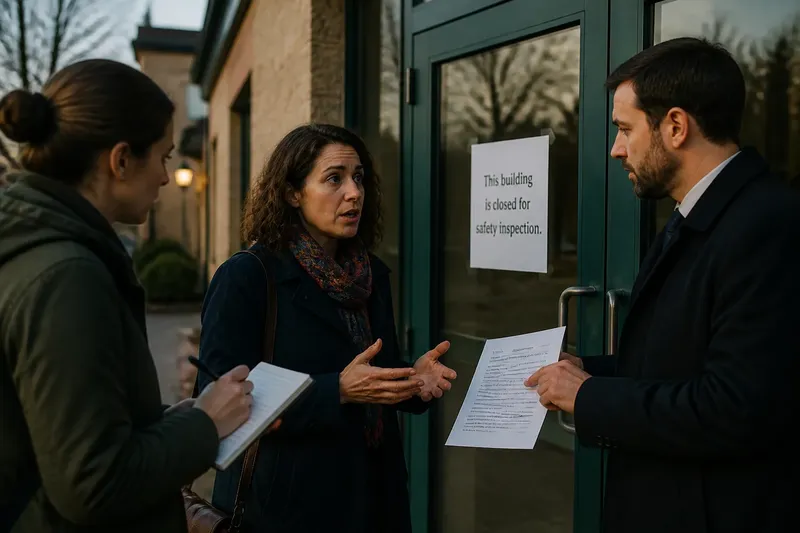
Imagine a clearly hypothetical report about a community hall closed on the evening of a public meeting. The council says the building was shut for a safety inspection. A meeting organiser says attendees were turned away without warning. A reporter sees a notice on the door the next morning. These details may all be accurate, yet they do not answer the same question.
Separate the claims
Before weighing sources, divide the story into individual claims. In this invented situation, they might be: the hall was closed; the closure was ordered for an inspection; the organiser received no warning; and the notice appeared before the meeting. A source that supports one claim does not automatically support the others.
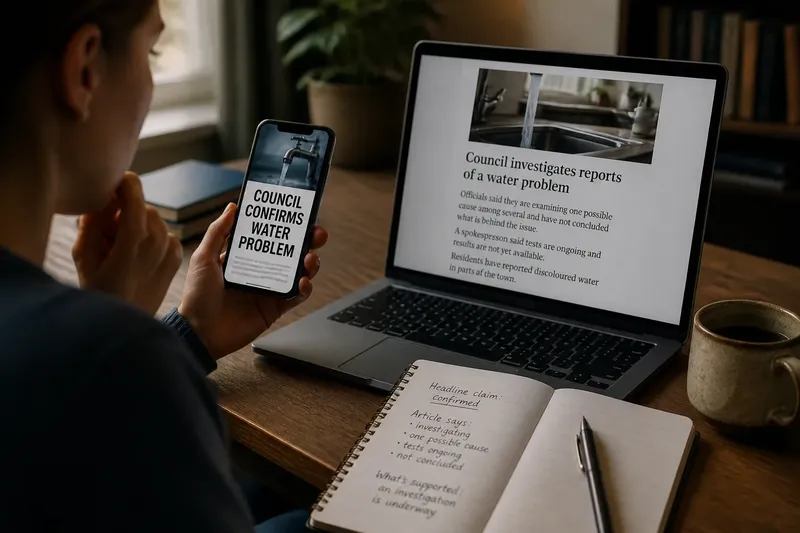
This matters when a source sounds authoritative. “The council closed the hall for inspection” combines an observable event with a reason and an actor. The door notice may support the claim that the hall was closed, but it cannot by itself establish who made the decision or why. Keep those parts distinct.
Interview testimony
An interview can provide a person’s account of what they experienced, what they were told and what they understood at the time. The organiser may describe arriving with attendees, finding the doors locked and receiving no message beforehand. That is relevant testimony about the organiser’s experience and communications.
It is not, by itself, a complete record of what the council knew or did. The organiser may not have seen an internal instruction, and “no warning” could mean no warning reached them rather than no warning was sent. Careful reporting preserves that distinction instead of turning a person’s account into a settled fact.
Useful questions concern the source’s position and basis of knowledge: Were they present? Did they hear the explanation directly? Are they describing something they witnessed or repeating what another person said? These questions do not imply dishonesty. They identify the boundaries of the account.
Written records
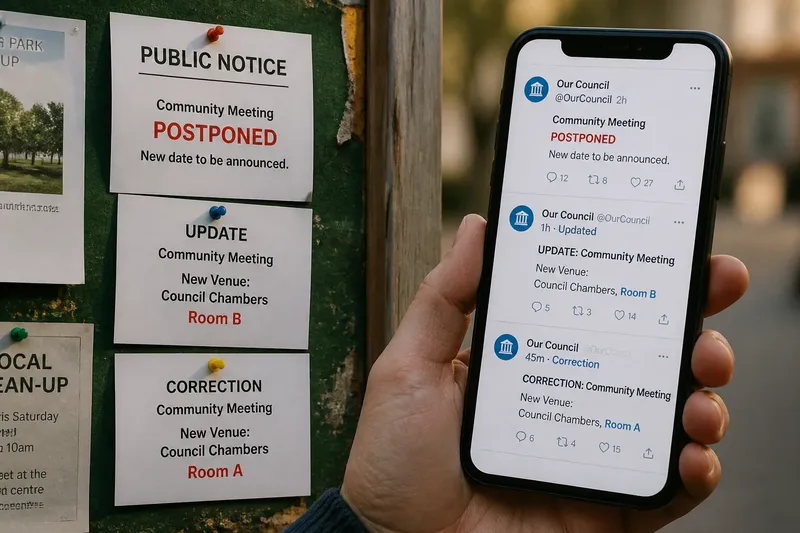
A written record can show that particular words were entered, issued or sent. In the imagined case, a closure notice might state that the hall was unavailable for an inspection. An email could show that a message was addressed to the organiser. But a record’s existence does not settle whether it was received, read, understood or acted on.
Its wording and context matter. A draft is not the same as an issued notice; a message addressed to someone is not proof that they saw it. Identify what kind of record it is, who created it and what event it documents. If the record contains a claim about the inspection, it may establish that the council gave that explanation, not necessarily that the inspection was the sole reason for closing the hall.
Look for the record’s role, not just its official appearance.
Direct observation
Direct observation can establish what a reporter noticed at a particular time and place. Seeing the hall’s doors locked the next morning supports the narrow statement that they were locked then. Seeing a notice on the door supports the statement that the notice was there when observed.
Neither observation reaches backwards automatically. A notice seen the next morning may have been posted after the meeting. A locked door does not reveal whether anyone was inside earlier, whether the closure was planned or who authorised it. State the limits: what was seen, where and when.
In the hypothetical case, the reporter might write that a notice was on the entrance the following morning, while separately attributing the explanation about an inspection to the council. That phrasing keeps a visible fact from carrying an unobserved history on its back.
How sources overlap?
Can an interview establish what happened?
It can support an account of what a source says they experienced, particularly when they were present. It does not automatically settle details outside their view or knowledge.
Does an official document settle the reason?
A document can establish what its author recorded or communicated, depending on its status and context. A stated reason remains a stated reason unless the reporting has grounds to establish more.
What does a reporter’s observation establish?
It supports what the reporter directly perceived at the observed time and place. It does not establish earlier events, hidden decisions or another person’s motives.
Can the sources confirm the same claim?
They can support different parts of a larger account, and genuine overlap can strengthen a particular claim. They are not interchangeable confirmations if each concerns a different time, event or kind of knowledge.
Build the account
Suppose the organiser describes arriving to find the hall shut. The council provides a dated notice naming an inspection, and the reporter sees that notice on the door the next morning. The resulting account can say the organiser reported being turned away, the council’s notice gave an inspection as the reason, and the reporter saw the notice later. It should not say the reporter witnessed the closure or that the notice proves the organiser had been informed.
The practical task is to attach each sentence to the source that can support it. If a sentence contains several claims, split it. “The council closed the hall after failing to warn the organiser” contains a decision, a sequence and a communication failure; no single item in this invented situation establishes all three.
For a source check, consider each observation and decide what it supports:
- If an interviewee says they were turned away and confirms they were present, attribute the account to them; if they are repeating another person’s story, identify that second-hand basis instead.
- If a source describes a warning as never received, report that experience; if the claim concerns whether a warning was sent, seek a relevant communication record before stating it.
- If a document is a draft, treat it as evidence of proposed wording; if it is marked as issued, check its date and recipient before describing it as a notice sent to someone.
- If an email is addressed to the organiser, say it was addressed to them; if receipt matters, seek evidence of delivery or acknowledgement rather than assuming they read it.
- If the reporter sees a locked door the next morning, state that it was locked then; if the claim concerns the meeting’s evening, find a source that covers that earlier time.
- If a notice gives an inspection as the reason, attribute that explanation to the notice or council; if the claim is that inspection was the sole cause, look for evidence that addresses other possible reasons.
These checks are not a demand to distrust every source. They keep a report’s language proportionate to what its sources can establish. For the hall story, the interview, record and observation form a useful account precisely because each has a separate job. The reader can see both what is known and what remains unresolved.
When reading any news account, trace one concrete sentence back to its source and ask what that source could have known. For interview, document or observation, that small check often reveals the difference between a reported fact, an attributed explanation and a conclusion the evidence has not yet earned.